About Hanoi
Hanoi at a Glance
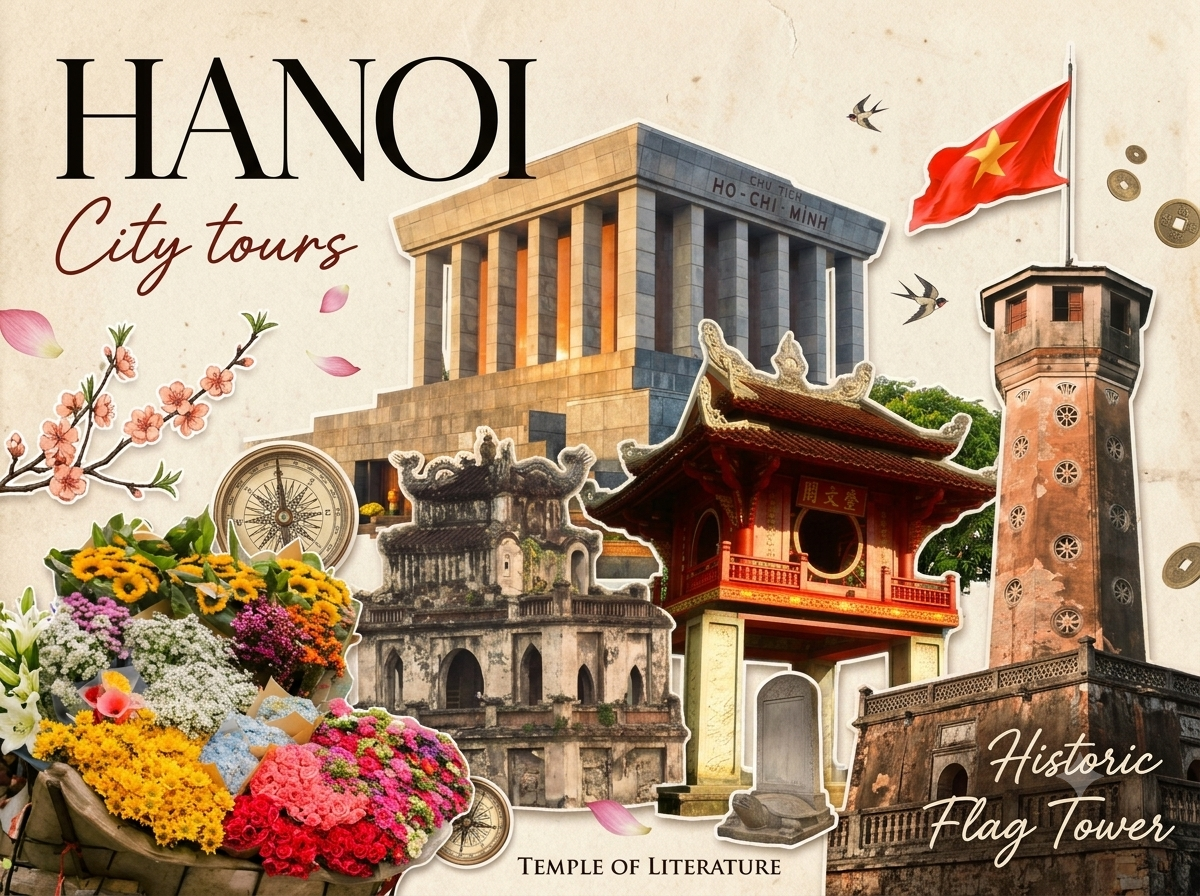
Hanoi, the capital of Vietnam, is a city where centuries of history and modern urban life exist side by side. Its character is shaped by historic streets, lakes, temples, colonial-era buildings, lively markets, cafes, and a strong street-food culture. For first-time visitors, the city can feel busy and energetic, but many of its major attractions are concentrated around a relatively manageable central area.
The city’s historic core, particularly the Old Quarter and the area around Hoan Kiem Lake, is a natural starting point for exploring Hanoi. From there, visitors can reach important cultural and historical sites, including the Temple of Literature, Ho Chi Minh Mausoleum, Thang Long Imperial Citadel, and Hoa Lo Prison.
The Character of the City
Hanoi is not simply a collection of individual attractions. Much of its appeal comes from experiencing the city between those attractions. Walking through narrow streets, watching the rhythm of local markets, stopping at a small café, or exploring the area around one of the city’s lakes can be as memorable as visiting a major landmark.
The city also has noticeably different areas, each offering a different atmosphere. The Old Quarter is known for its dense streets and commercial activity, while the area around West Lake has a more relaxed feel. Historic landmarks and religious sites add another layer to the city, making Hanoi particularly interesting for travellers who want to combine sightseeing with local culture.
Exploring Hanoi: What This Guide Covers
This guide focuses on the places and experiences that are most useful for a first visit to Hanoi. It covers the city’s major attractions, a practical 3-day itinerary, estimated travel costs, the best time to visit, and useful advice for getting around.
Rather than treating every attraction as equally important, the guide also helps you decide how to use your limited time. Some places are best for history and culture, some for architecture and atmosphere, and others for experiencing everyday Hanoi. The aim is to give you a practical way to organize your visit rather than simply provide a long list of places to see.
Best Time to Visit
Hanoi Through the Seasons
Hanoi experiences noticeable seasonal changes, so the time of year can affect how comfortable it is to explore the city. Spring and autumn generally offer more pleasant conditions for walking and sightseeing, while summer can be hot, humid, and rainy. Winter brings lower temperatures to Hanoi, and the city may see cloudy skies and lingering moisture in the air.
For a sightseeing-focused trip, the weather matters because many of Hanoi’s attractions are explored on foot or through outdoor areas. Planning around comfortable temperatures can make it easier to combine several places in a single day.
When Hanoi Is Most Comfortable to Explore
October to December is often a comfortable period for exploring Hanoi, with cooler conditions compared with the hotter months. March and April can also be suitable for sightseeing, although conditions can vary.
If your priority is walking around the Old Quarter, visiting historical sites, exploring markets, and spending time around Hanoi’s lakes, choosing a period with milder weather can make the experience more enjoyable.
Rain, Heat and What They Mean for Your Plans
Hanoi’s weather should be considered when planning a daily itinerary rather than treated as a minor detail. During hotter or wetter periods, outdoor sightseeing can become tiring, particularly when several attractions are grouped together.
A practical approach is to keep outdoor walks and open-air attractions flexible and place museums, historic buildings, cafés, and other indoor activities into the schedule when the weather is less favourable. This gives you more flexibility instead of allowing rain or heat to disrupt an entire day.
Ultimately, there is no single month that works perfectly for every traveller. The best time to visit Hanoi depends on whether you prioritize cooler sightseeing conditions, fewer weather interruptions, seasonal atmosphere, or simply the dates available for your trip.
15 Things to Do in Hanoi
Hanoi is a city where major landmarks, historic streets, lakes, markets, and everyday local life are closely connected. Many of the city’s main attractions can be explored together on foot or with short rides between them, making it possible to see a lot without spending the entire day travelling.
Rather than treating every attraction as equally important, I would group Hanoi’s highlights according to the kind of experience you are looking for. The historic centre is ideal for first-time sightseeing, while the western side of the city offers a slower atmosphere around West Lake. Museums, temples, markets, and old streets add different sides of Hanoi beyond the main tourist landmarks.
Classic Hanoi Experiences
1. Hoan Kiem Lake

Hoan Kiem Lake makes a convenient starting point for discovering Hanoi. Located in the centre of the city, the lake provides a quieter contrast to the surrounding streets and is closely connected with Hanoi’s historic identity.
A walk around the lake is particularly useful early in a Hanoi itinerary because several other attractions are within easy reach. The Old Quarter, Ngoc Son Temple and St. Joseph’s Cathedral can all be combined with a visit here.
Why visit: It gives you an immediate introduction to central Hanoi and works well as a starting point for exploring the surrounding area.
My recommendation: Start your first morning here before moving into the Old Quarter. The area feels more relaxed before the day becomes busy.
2. Ngoc Son Temple

Located on a small island in Hoan Kiem Lake, Ngoc Son Temple is one of Hanoi’s most recognisable cultural landmarks. The temple is reached by crossing the distinctive red bridge from the lakeside.
The attraction is relatively compact, so it does not require a large part of your day. Its location makes it particularly convenient when visiting Hoan Kiem Lake.
Why visit: The combination of the lake, bridge, temple architecture and central location makes this an easy cultural stop during a city walk.
My recommendation: Visit it together with Hoan Kiem Lake rather than planning it as a separate half-day activity.
3. Hanoi Old Quarter

The Old Quarter is where Hanoi’s historic streets, small shops, cafés, food stalls and everyday activity come together. Its narrow streets can feel busy and chaotic, but that is also part of the experience.
Instead of trying to cover every street, I would allow time to walk without a strict route. The area is particularly interesting because the experience changes throughout the day, from morning food vendors to busy afternoon streets and a livelier evening atmosphere.
Why visit: It provides a stronger sense of Hanoi’s street life than simply visiting individual monuments.
My recommendation: Give the Old Quarter several hours rather than rushing through it between other attractions.
History & Cultural Landmarks
4. Ho Chi Minh Mausoleum

The Ho Chi Minh Mausoleum is one of Hanoi’s most significant historical sites and an important part of the city’s political and cultural landscape. The surrounding complex also includes several other attractions, making it practical to combine multiple sites in one visit.
Visitors should check current opening arrangements and visitor rules before going, as access can be subject to specific schedules and restrictions.
Why visit: It offers an important connection to Vietnam’s modern history.
My recommendation: Include it on a morning dedicated to Hanoi’s historical landmarks and check the visiting schedule before you go.
5. One Pillar Pagoda

One Pillar Pagoda is a small but distinctive Buddhist temple located near the Ho Chi Minh Mausoleum complex. Its unusual architectural design makes it different from many of the larger religious sites in Hanoi.
Because the pagoda is relatively small, it works well as part of a wider sightseeing route rather than as a standalone destination.
Why visit: The architecture is distinctive, and its location makes it easy to combine with other nearby historical attractions.
My recommendation: Visit it alongside the Ho Chi Minh Mausoleum and Ho Chi Minh Museum.
6. Ho Chi Minh Museum

The Ho Chi Minh Museum provides historical and cultural context connected with Ho Chi Minh and Vietnam’s modern history. It is located close to the Mausoleum and One Pillar Pagoda.
For travellers who enjoy museums and historical context, this can add more depth to the landmarks seen in the surrounding area.
Why visit: It gives you more background information rather than relying only on monuments and buildings.
My recommendation: If you are interested in history, allow enough time to explore the museum rather than simply passing through the surrounding complex.
7. Temple of Literature

The Temple of Literature is one of Hanoi’s most important cultural landmarks and is associated with Vietnam’s long educational and scholarly traditions. Its courtyards, traditional architecture and landscaped areas create a noticeably calmer environment than the busy streets outside.
It is also one of the places where Hanoi’s historical character is particularly easy to appreciate through architecture and atmosphere.
Why visit: It combines history, traditional architecture and a quieter sightseeing experience.
My recommendation: Visit the Temple of Literature alongside nearby historical sites, and allow enough time to explore its courtyards and architecture at a relaxed pace.
8. Thang Long Imperial Citadel

The Thang Long Imperial Citadel represents an important part of Hanoi’s long history as a centre of political power. The site contains historic structures and archaeological remains that provide a different perspective from the temples and museums around the city.
Why visit: It helps explain Hanoi’s historical development and its role as an important political centre.
My recommendation: This is particularly worthwhile if you want more than the standard Old Quarter sightseeing experience.
9. Hoa Lo Prison

Hoa Lo Prison is a historical site in central Hanoi that presents a difficult and important part of the city’s past. The site is now a museum, with exhibits and displays relating to its history.
The experience is more serious than a typical sightseeing attraction, so it is worth allowing time to take in the exhibits rather than rushing through.
Why visit: It provides historical context that is different from Hanoi’s temples, lakes and architectural landmarks.
My recommendation: Include it if you want your itinerary to contain more historical depth rather than focusing entirely on sightseeing and photography.
Architecture & City Walks
10. St. Joseph’s Cathedral

St. Joseph’s Cathedral is one of Hanoi’s most recognisable architectural landmarks. Its Gothic-inspired appearance stands out among the surrounding streets and makes the area a popular stop during walks through central Hanoi.
The cathedral is also surrounded by cafés and busy streets, so the visit can naturally become part of a wider exploration of the city centre.
Why visit: The architecture provides a contrast to Hanoi’s Buddhist temples and traditional buildings.
My recommendation: Combine the cathedral with the Old Quarter and nearby streets instead of travelling across the city specifically for this one stop.
11. Hanoi Opera House

The Hanoi Opera House is a prominent architectural landmark in the French Quarter and one of the city’s most recognisable buildings. The Opera House is also a good starting point for discovering the elegant streets and colonial-era architecture of Hanoi’s French Quarter.
Why visit: It introduces the architectural character of Hanoi’s French Quarter and provides a visual contrast to the Old Quarter.
My recommendation: Visit the exterior while exploring the surrounding area, and check current performance or visitor information if you want to see the interior.
Local Life & Shopping
12. Hanoi Train Street

Hanoi Train Street became widely known for its railway passing through a narrow residential area surrounded by homes, cafés and shops. It is one of the city’s most unusual urban experiences.
Entry rules may vary over time, so check the latest visitor guidelines and stay within permitted areas.
Why visit: The setting is very different from Hanoi’s conventional monuments and gives you a glimpse of how closely tourism and everyday urban life can exist in the city.
My recommendation: Treat it as a short experience rather than the main focus of your Hanoi itinerary, and do not enter restricted areas for photographs.
13. Dong Xuan Market

Dong Xuan Market is one of Hanoi’s major traditional markets and offers a more commercial and local atmosphere than the city’s formal tourist attractions. You can also stroll through the nearby lanes to discover more shops, street vendors and everyday life in the Old Quarter.
Why visit: It is a good place to observe local shopping activity and explore Hanoi’s market culture.
My recommendation: Visit when you are already exploring the Old Quarter rather than making a separate journey solely for the market.
Lakeside & Evening Spots
14. West Lake (Tay Ho)

Compared with Hoan Kiem Lake, West Lake offers a broader waterfront landscape and a more relaxed setting for visitors. Tay Ho’s lakeside neighbourhood features a variety of dining spots and cafés where visitors can relax and enjoy the views.
West Lake is a good choice for enjoying a more open setting away from the crowds and busy traffic in downtown Hanoi.
Why visit: The lakeside setting provides a different pace from the Old Quarter and central landmarks.
My recommendation: Consider visiting in the late afternoon and staying into the evening when the area becomes more relaxed.
15. Tran Quoc Pagoda

Located on a small peninsula beside West Lake, Tran Quoc Pagoda is one of Hanoi’s notable Buddhist sites. Its lakeside setting makes it visually different from temples located within the city’s dense streets.
The pagoda can be combined naturally with a visit to West Lake, making the two attractions a practical pairing.
Why visit: It combines religious heritage with a peaceful lakeside setting.
My recommendation: Visit around the same time as West Lake so you can experience both the cultural site and the surrounding lake area without adding unnecessary travel.
How I Would Prioritize These 15 Places
If you have limited time, I would not try to spend equal amounts of time at all 15 attractions. Hanoi works better when you combine nearby places and leave some time for walking, food and simply experiencing the streets.
On your first trip, focus on Hoan Kiem Lake, Ngoc Son Temple and the Old Quarter, as these spots offer a good introduction to Hanoi’s character and daily life. For history and culture, the Ho Chi Minh complex, Temple of Literature, Thang Long Imperial Citadel and Hoa Lo Prison provide different perspectives. If you want a slower side of Hanoi, West Lake and Tran Quoc Pagoda fit naturally into an afternoon or evening.
Plan your days around a few key attractions, leaving room to discover local food, neighbourhoods and everyday life along the way.
3-Day Hanoi Itinerary
Three days is enough to experience many of Hanoi’s major attractions without having to rush through every location. Plan your sightseeing by neighbourhood so you can explore at a comfortable pace and enjoy Hanoi’s cuisine, coffee shops and street life along the way.
This itinerary focuses on a balance of historic landmarks, cultural sites, local streets and slower-paced areas. Rearrange the stops as needed to suit each site’s visiting hours, the day’s conditions and your preferred pace.
Day 1 — Old Quarter & Central Hanoi
Begin your first morning at Hoan Kiem Lake and take a leisurely stroll along its waterfront. Visit Ngoc Son Temple, then head towards the Old Quarter to discover Hanoi’s traditional streets.
Dedicate the rest of the morning and much of the afternoon to discovering the Old Quarter’s lanes on foot. Rather than following a strict route, allow some time to explore its narrow streets, small shops, cafés and local food spots.
Later in the day, visit St. Joseph’s Cathedral and look around the nearby neighbourhood. If your schedule permits, make your way to the Hanoi Opera House and explore the architecture of the French Quarter.
Suggested Day 1 Route
Hoan Kiem Lake → Ngoc Son Temple → Hanoi Old Quarter → St. Joseph’s Cathedral → Hanoi Opera House
Evening
Head back to the Old Quarter after sunset to enjoy dinner and see its streets filled with evening activity.
Day 2 — History & Culture
Use the second day to explore Hanoi’s major historical and cultural landmarks.
Start with the Ho Chi Minh Mausoleum, then visit the nearby One Pillar Pagoda and Ho Chi Minh Museum. You can visit both sites during the same morning without needing to make a separate trip for each.
Next, make your way to the Temple of Literature to admire its historic structures, landscaped courtyards and traditional Vietnamese design.
In the afternoon, visit Thang Long Imperial Citadel to explore another part of Hanoi’s historical development. Finish the day’s historical sightseeing at Hoa Lo Prison.
Suggested Day 2 Route
Ho Chi Minh Mausoleum → One Pillar Pagoda → Ho Chi Minh Museum → Temple of Literature → Thang Long Imperial Citadel → Hoa Lo Prison
Evening
Keep the evening flexible. Once you’ve finished the day’s cultural visits, leave the rest of the evening open for a quiet meal or some leisure time in the Old Quarter.
Day 3 — Market Visits, Neighbourhood Exploration & West Lake
Use the third day for a slower combination of local experiences and areas away from the main historic centre.
Begin at Dong Xuan Market, then browse the nearby streets to see local vendors, small businesses and everyday neighbourhood activity. From there, visit Hanoi Train Street, following current local access and safety restrictions.
In the afternoon, move towards West Lake (Tay Ho). The area provides a noticeable change of pace from the busy central districts.
Visit Tran Quoc Pagoda near the western shore of West Lake later in the afternoon, then take time to enjoy the surrounding waterfront.
Suggested Day 3 Route
Dong Xuan Market → Hanoi Train Street → West Lake → Tran Quoc Pagoda
Evening
End your day with a meal at a West Lake restaurant or a quiet stroll beside the water, enjoying a different atmosphere from the city’s crowded central streets.
Adjusting the Itinerary for Weather
Temperature, humidity and rainfall can influence how much time you will want to spend exploring Hanoi on foot. During hot or rainy periods, it is useful to keep museums, cafés and indoor attractions as flexible alternatives.
If heavy rain affects Day 1, you can move some of the outdoor walking to another day and spend more time at museums or historical attractions.
When temperatures rise, plan your outdoor visits for the cooler hours and schedule longer walks through the Old Quarter or beside West Lake towards the evening.
The itinerary should therefore be treated as a framework rather than a fixed schedule. The main advantage of three days in Hanoi is that you can cover the major historical areas while still leaving room for spontaneous food stops, cafés and exploring streets that are not on your original plan.
How Much Does Hanoi Cost?
Your total spending in Hanoi will depend on where you stay, what you eat, how you travel and which experiences you choose. Booking accommodation near Hoan Kiem Lake or the Old Quarter can also reduce travel time when visiting nearby attractions.
Budget, Mid-Range & Luxury Travel
Visitors can plan their Hanoi holiday according to their budget, whether they prefer basic amenities or a more luxurious experience. Budget travellers can choose hostels, local food and public transport, while mid-range travellers can combine comfortable hotels with restaurants, cafés and ride-hailing services. Luxury travellers can spend more on premium hotels, private transportation, fine dining and organised tours.
Accommodation & Food Costs
Your hotel choice can have a considerable effect on the overall cost of your stay. The Old Quarter and Hoan Kiem suit travellers who want easy access to popular sights, whereas Tay Ho may appeal to those looking for a calmer neighbourhood with plenty of places to eat and relax.
Food is flexible as well. Local restaurants and street food can keep costs low, while cafés, international restaurants and fine dining will increase daily spending.
Transportation & Attraction Costs
Exploring on foot can help you save on transport while visiting several sights clustered around Hoan Kiem Lake and the Old Quarter. For longer journeys, buses, taxis and ride-hailing services are practical options.
Several public areas and walking experiences are free, while museums, historical sites, guided tours and other activities may have entrance or booking fees.
Planning Your Hanoi Budget
For a three-day trip, I would plan the budget around four main areas:
- Accommodation – Choose your location and hotel category first.
- Food – Allow flexibility for both local meals and cafés.
- Transportation – Use walking where practical and rides for longer distances.
- Attractions – Check current entrance fees before your trip.
Prices can vary by season, location and booking date, so current rates should be checked before finalising your travel budget.
Hanoi Travel Tips
A little planning can make Hanoi much easier to explore. The city can be busy, especially around the Old Quarter, but knowing how to move around, when to visit attractions and what to expect from the weather can make the trip more comfortable.
Getting Around Hanoi
Walking is one of the easiest ways to explore central Hanoi, particularly around Hoan Kiem Lake and the Old Quarter. For longer distances, buses, taxis and ride-hailing services are useful options.
When crossing busy streets, move steadily and stay aware of surrounding traffic rather than making sudden movements.
Food & Dining Tips
Hanoi is known for its street food, local restaurants and café culture. Sampling Hanoi’s regional specialities offers a closer look at the city’s culinary traditions and everyday culture.
For popular food spots, visiting during less busy hours can make the experience more comfortable. If you have dietary restrictions, check ingredients clearly before ordering.
Weather & What to Pack
Hanoi can be hot, humid and rainy during some periods, while cooler conditions are possible during the winter months. Choose clothing that suits the forecast, and carry a compact umbrella or rain jacket if showers are likely.
Comfortable walking shoes are useful because several areas are easiest to explore on foot.
Common Tourist Mistakes
Cramming too many sightseeing stops into one day can leave you tired and with little time to appreciate each place. Keep your schedule flexible so you can enjoy local meals, explore side streets and make spontaneous stops along the way.
It is also worth checking current opening hours, entrance requirements and access restrictions before visiting major attractions.
Safety & Local Etiquette
Keep your belongings secure in crowded areas and remain aware when walking near busy roads. At temples, religious sites and historical attractions, dress respectfully and follow posted visitor rules.
Give yourself time to adjust to Hanoi’s lively streets and different rhythm of daily life. Hanoi can feel busy and chaotic at first, but taking your time makes it easier to enjoy the different sides of the city.
Conclusion
Hanoi is a destination that works well for travellers who want a combination of history, culture, local life and food. Its major attractions are spread across different parts of the city, but many central sights can be combined into easy walking routes.
What I Would Prioritize
If I had three days in Hanoi, I would prioritise Hoan Kiem Lake, the Old Quarter, Ngoc Son Temple and the city’s main historical landmarks first. I would then use the remaining time for places such as West Lake, Tran Quoc Pagoda and Dong Xuan Market to experience a different side of the city.
I would also avoid trying to see everything at once. Leaving some free time for local food, cafés and walking through the streets can make the trip feel less rushed.
Who Hanoi Is Suited To
Hanoi can appeal to a wide range of travellers. History and culture enthusiasts have museums, temples and historical sites to explore, while travellers interested in food and local life can spend hours around the Old Quarter and its surrounding streets.
For a first visit, three days provides a good starting point, while adding extra days gives you more time to explore neighbourhoods, food spots and attractions at a slower pace.
FAQs
Is 3 days enough for Hanoi?
Yes. Three days is enough to explore Hanoi’s main attractions, including the Old Quarter, Hoan Kiem Lake, historical sites and West Lake.
How much time do you need for a Hanoi trip?
For a first visit, 3 days offers a good balance of sightseeing, food and local exploration. A longer stay allows a slower pace.
Is Hanoi expensive?
Hanoi suits different budgets. Local food, walking and public transport can keep costs manageable, while hotels, private transport and fine dining increase spending.
When should you plan a trip to Hanoi?
Hanoi can be visited year-round, but spring and autumn generally offer more comfortable conditions for walking and sightseeing.
Is Hanoi easy to explore?
Yes. Central areas such as Hoan Kiem Lake and the Old Quarter are easy to explore on foot. Taxis and public transport are useful for longer distances.
What should you not miss in Hanoi?
For a first visit, prioritise Hoan Kiem Lake, Ngoc Son Temple, the Old Quarter, the Temple of Literature and major historical landmarks.
Is Hanoi suitable for first-time visitors?
Yes. Hanoi offers historical attractions, cultural sites, local food, markets and neighbourhoods that are easy to combine during a short trip.